Zones, Labels, and a Layout That Keeps It Tidy (Even on Busy Weeks)
A closet stays clean when putting things away feels easier than leaving them out. That’s the whole idea behind a “One-Minute Closet”: every item has a home you can reach, see, and return in under a minute—no reshuffling stacks, no “I’ll do it later” piles.
Below is a practical, experience-based setup you can copy in one afternoon and maintain in about 60 seconds a day.
What a “One-Minute Closet” really means
It’s not about being minimal. It’s about friction.
If you have to:
- open a bin, move three stacks, find a matching hanger, or
- decide where something goes every time…
…your closet will drift messy. A One-Minute Closet removes decisions by using:
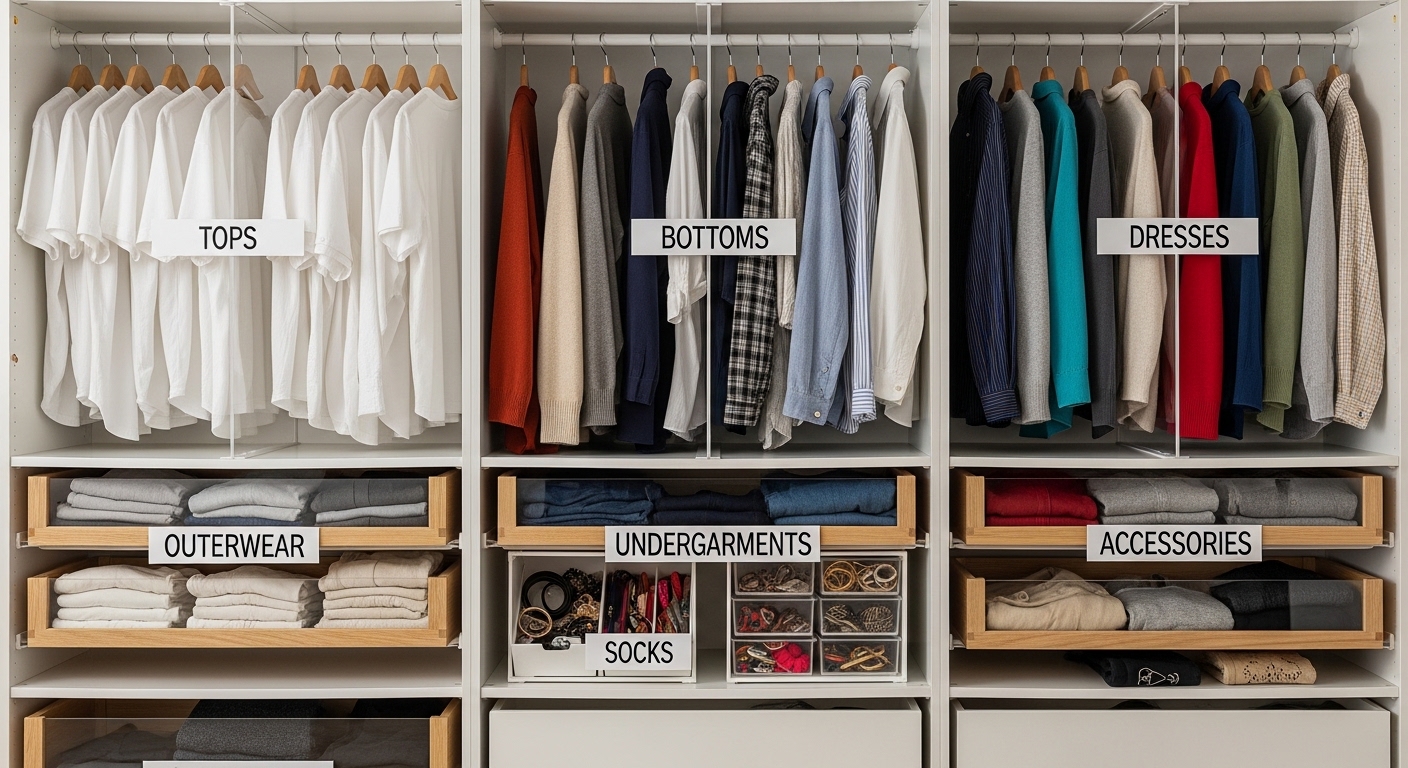
- Zones (clear areas for categories)
- Labels (so your brain doesn’t negotiate)
- A simple layout (so the most-used items are easiest to reach)
Step 1: Do a 10-Minute Reset (don’t overthink it)
Before you organize, you need a clean starting point.
Quick reset:
- Pull everything that’s not clothing out (random bags, cords, trash, old packaging).
- Toss dirty laundry in one basket.
- Put “not sure” items in a temporary pile (don’t decide now).
Real-life tip:
If you try to “perfectly declutter” first, you’ll stall. The One-Minute Closet works even if you keep too many clothes—because the system reduces chaos.
Step 2: Create 5 Zones (the simplest layout that actually sticks)
You can tweak the categories, but don’t go past 5–6 zones or you’ll add decision fatigue.
Zone A — Daily Wear (Prime Real Estate)
What goes here: the clothes you wear 70–80% of the time
Where: easiest-to-reach hanging space at eye level
Why it works:
When your daily stuff is front-and-center, you stop digging—and digging is what creates mess.
Zone B — Work / Going Out (Secondary Hanging)
What goes here: office outfits, nicer pieces, “not daily but frequent”
Where: next to Daily Wear, still reachable
Pro tip:
Group by outfit type (tops together, bottoms together). Your brain finds things faster.
Zone C — Folded Basics (Open Shelf or Drawer Area)
What goes here: tees, gym wear, pajamas, jeans
Where: shelves or drawers you can access without moving other stacks
My experience:
Folding only works when stacks are short. Tall stacks turn into a landslide. Keep stacks to about 8–12 items max.
Zone D — Seasonal / Occasional (High Shelf)
What goes here: heavy coats, extra blankets, seasonal shoes
Where: top shelf or hardest-to-reach spots
Rule:
If you don’t use it weekly, it doesn’t deserve easy access.
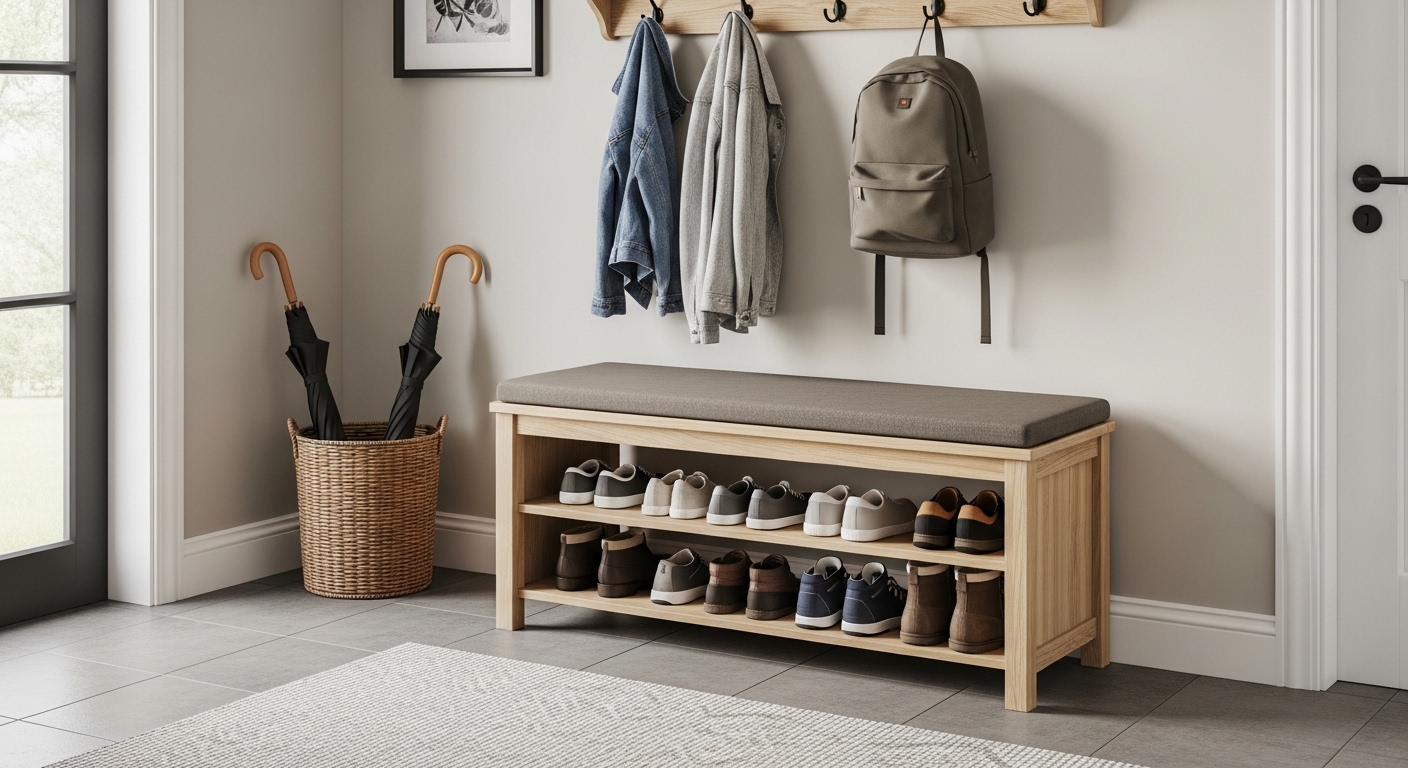
Zone E — “Exit Zone” (The One-Minute Saver)
What goes here: tomorrow’s outfit, gym bag, work bag, belt you actually use
Where: one hook area or one shelf near the closet edge
Why this zone is magic:
It prevents the “chair pile” and the “floor pile.” One spot for items in motion.
Step 3: Use Labels (even if you think you don’t need them)
Labels aren’t for looks—they remove thinking.
The best label style: short, obvious, boring
Examples:
- DAILY TOPS
- WORK TOPS
- JEANS
- GYM
- SEASONAL
Experience tip:
If you need to “interpret” a label, it won’t stick. Clear labels beat cute labels.
Step 4: Pick a layout rule (so it stays tidy automatically)
Option 1: Left-to-right by category
- Daily wear → Work/Going out → Dresses/long items (if any)
Option 2: By color within a category (only if you enjoy it)
This looks clean, but it can be slower to maintain. Don’t force it.
Option 3 (My favorite): “Most used = closest”
Put the items you reach for most closest to the closet opening and at hand height.
Why this is the most sustainable:
You’re designing for behavior, not aesthetics.
Step 5: The “One-Minute” routine (daily + weekly)
This is what keeps the system from collapsing.
Daily (60 seconds)
- Hang up 3–5 items max
- Put folded items directly into the right zone
- Anything “in motion” goes to the Exit Zone, not the floor
Weekly (10 minutes)
- Reset the Exit Zone (remove random items)
- Move any “seasonal drift” back to Zone D
- Fix one shelf that got messy (just one)
Real-life truth:
You don’t need a perfect closet. You need a closet that self-corrects quickly.
Common mistakes (and how to avoid them)
Mistake 1: Too many micro-categories
If you have “white tees / black tees / graphic tees / sleep tees”… you’ll stop following it.
Fix:
Start broad. You can refine later.
Mistake 2: Over-stacking folded items
Stacks become unstable, you pull one thing, everything collapses.
Fix:
Short stacks or file-folding, and keep the “most used” on top.
Mistake 3: No “in-between” space
Real life needs a buffer zone. Without one, clutter goes to the floor.
Fix:
The Exit Zone is your buffer. Protect it.
Mistake 4: Organizing for fantasy-you
A lot of systems fail because they assume you’ll be extra disciplined.
Fix:
Set up the closet for the version of you who’s tired, busy, and rushing.
The best “One-Minute Closet” setup (simple template)
If you want a quick blueprint:
- Hang (left): Daily Wear
- Hang (right): Work/Going Out
- Shelf 1: Folded basics (tees, gym, pajamas)
- Shelf 2: Jeans + sweaters
- Top shelf: Seasonal / occasional
- One corner/hook: Exit Zone
Final takeaway
A One-Minute Closet works because it reduces steps:
- fewer decisions
- fewer piles
- fewer “temporary” places that become permanent
Start with 5 zones, label them clearly, and keep stacks short. Do the 60-second reset daily and a 10-minute weekly touch-up—your closet stays tidy without needing a full reorganization every month.