If you’ve ever bought shelves, installed them, and then realized they either look “busy” or don’t hold what you need… you’re not alone. The best choice isn’t just style—it’s about load, wall type, floor space, and how often you’ll move things around.
Below is a clear, SEO-ready comparison of floating shelves vs freestanding shelves—with real pros/cons and the best pick depending on your home.
Quick Verdict
- Cleaner look (most minimal): Floating shelves
- Holds more (overall capacity): Freestanding shelves
- Least “regret” for most people: Freestanding shelves (more flexible, fewer install mistakes)
- Best for small spaces when done right: Floating shelves (saves floor space)
What “looks cleaner” really means
“Clean” usually means:
- less visual bulk
- fewer visible supports
- easier to keep tidy (no clutter traps)
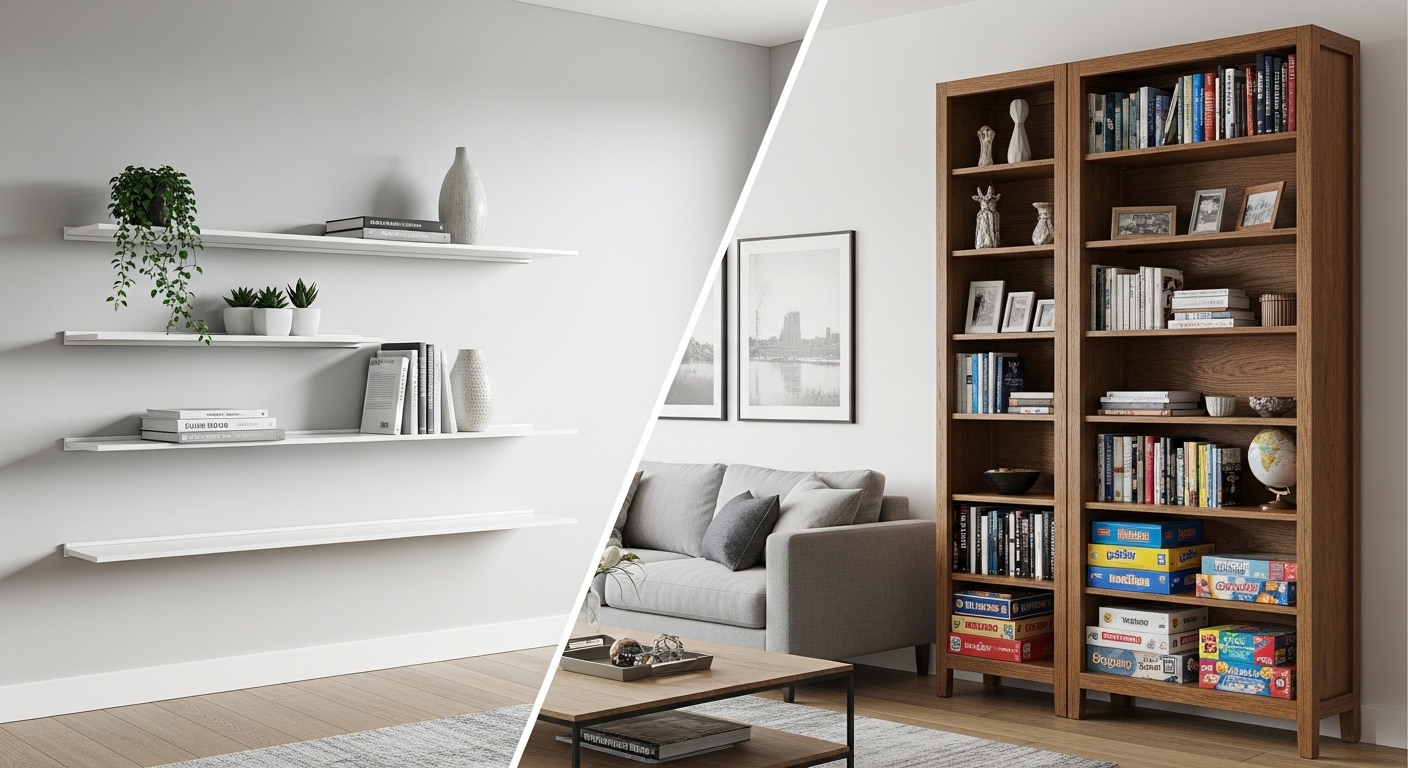
Floating shelves win on minimalism because the brackets are hidden, so you get that “built-in” look.
But: floating shelves only look clean if you style them intentionally. If you overfill them, they can start to look chaotic faster than a bookcase.
What “holds more” really means
There are two kinds of “more”:
- Weight capacity per shelf
- Total storage capacity in the room
Floating shelves can hold a decent amount if installed correctly—but freestanding shelves usually win on total storage because they have multiple deep shelves and a full frame distributing weight.
Floating Shelves: Pros & Cons
✅ Pros
1) The cleanest, most modern look
No visible brackets = minimal, upscale vibe.
2) Saves floor space
Perfect for tight rooms where every inch matters.
3) Great for “display + light storage”
Decor, plants, framed photos, small baskets, spices, toiletries.
4) Makes a room feel more open
No furniture legs, no bulky frame.
❌ Cons
1) Installation quality is everything
If you miss studs, use weak anchors, or mount unevenly → wobble, sag, or wall damage.
2) Lower “forgiveness”
You can’t easily move it without patching holes.
3) Depth is often limited
Many floating shelves are not deep enough for large bins, big books, or bulky items.
4) Heavy loads can become stressful
Over time, too much weight can cause sagging or loosening if not properly mounted.
Best use cases
- Small entryways, bathrooms, kitchens
- Display shelves that you keep visually curated
- Storage where you’ll use baskets (to hide small items)
Freestanding Shelves: Pros & Cons
✅ Pros
1) Highest total capacity (and usually depth)
More shelves, deeper shelves, stronger frame support.
2) No drilling required
Great for renters, frequent movers, or anyone who hates wall projects.
3) Easier to rearrange and upgrade later
Move it, swap it, change rooms—no patching holes.
4) Better for heavy or bulky storage
Books, bins, folded towels, appliances, kids’ stuff.
❌ Cons
1) Takes floor space
A bookcase footprint can make small rooms feel tighter.
2) Can look “busier” visually
More structure = more visual weight. Open shelves can look messy if not styled.
3) Tip risk in homes with kids/pets
Tall units should be anchored for safety.
Best use cases
- Family storage (toys, school gear, pantry overflow)
- Heavy items, bulky bins, lots of categories
- People who reorganize often
Head-to-Head Comparison (No Fluff)
1) Looks cleaner
- Floating shelves: cleaner, more minimal
- Freestanding shelves: depends on styling; can look bulky
Winner: Floating shelves
2) Holds more overall
- Floating shelves: limited by wall strength + shelf depth
- Freestanding shelves: higher total capacity + deeper shelves
Winner: Freestanding shelves
3) Regret factor (most common issues)
- Floating shelves regret: wobble, crooked install, wall damage, not deep enough
- Freestanding regret: too big, looks cluttered, eats floor space
Winner (for most people): Freestanding shelves
4) Best for renters
- Floating: holes required (usually)
- Freestanding: no drilling
Winner: Freestanding shelves
5) Best for small spaces
- Floating: saves floor space
- Freestanding: can still work if narrow + tall
Winner: Floating shelves (if you don’t need heavy storage)
Which should you choose? (Best pick by scenario)
Choose Floating Shelves if you want:
- The cleanest, built-in look
- To save floor space
- Storage that’s mostly light/medium weight
- A “display shelf” vibe (decor + baskets)
Most common “no regret” setup:
Floating shelf + matching baskets (hide clutter) + limit to 70–80% full.
Choose Freestanding Shelves if you want:
- Maximum storage capacity
- Flexibility to move/rearrange
- Heavy-duty everyday storage (books, bins, kids’ stuff)
- The safest choice when you’re not sure what you’ll store long-term
Most common “no regret” setup:
A narrow tall shelf + labeled bins on lower shelves + open display on top.
Best Overall Choice (Clean + Capacity + Low Regret)
If you want a safe, versatile choice that nearly everyone ends up happy with:
✅ Freestanding shelves (narrow, tall, with a few bins)
They hold more, you can change your mind later, and you avoid the most common floating-shelf regrets (crooked install, weak anchors, not deep enough).
But if your priority is style and open space:
✅ Floating shelves (installed into studs, styled with baskets)
They look cleaner—just be honest about what you’ll store.
Pro Tips to Avoid Regret
- If you don’t know what you’ll store yet → freestanding (more forgiving)
- If you’re storing heavy items (books, appliances) → freestanding or wall shelves into studs
- If you want minimal look but need storage → floating shelves + matching bins
- If kids/pets are in the home → anchor tall freestanding units for safety