Choosing between glass and plastic isn’t just about looks. It affects how your food tastes, whether containers hold odors or stains, how confident you feel microwaving, and how often you’ll replace lids that warp or crack. Here’s a clear, real-world comparison—plus which one is the best fit for your kitchen.
Quick takeaway
- Pick glass if you care most about taste purity, stain resistance, oven/microwave confidence, and long-term durability.
- Pick plastic if you care most about light weight, portability, and budget-friendly meal prep.
- The “best overall” setup for most people: glass for leftovers + reheating, plastic for on-the-go and cold storage.
1) Taste & Odor: which keeps food “cleaner”?
Glass
Pros
- Best for taste neutrality: glass doesn’t hold smells from garlic, curry, kimchi, etc.
- Great for storing strong foods and rotating leftovers without lingering odors.
Cons
- None that matter here—glass is basically the winner for taste.
Plastic
Pros
- Fine for mild foods (sandwiches, salads, snacks).
Cons
- More likely to absorb odors over time, especially from oily/spicy foods.
- Some plastics can develop a “container smell” even after washing.
Winner: Glass (by a lot)
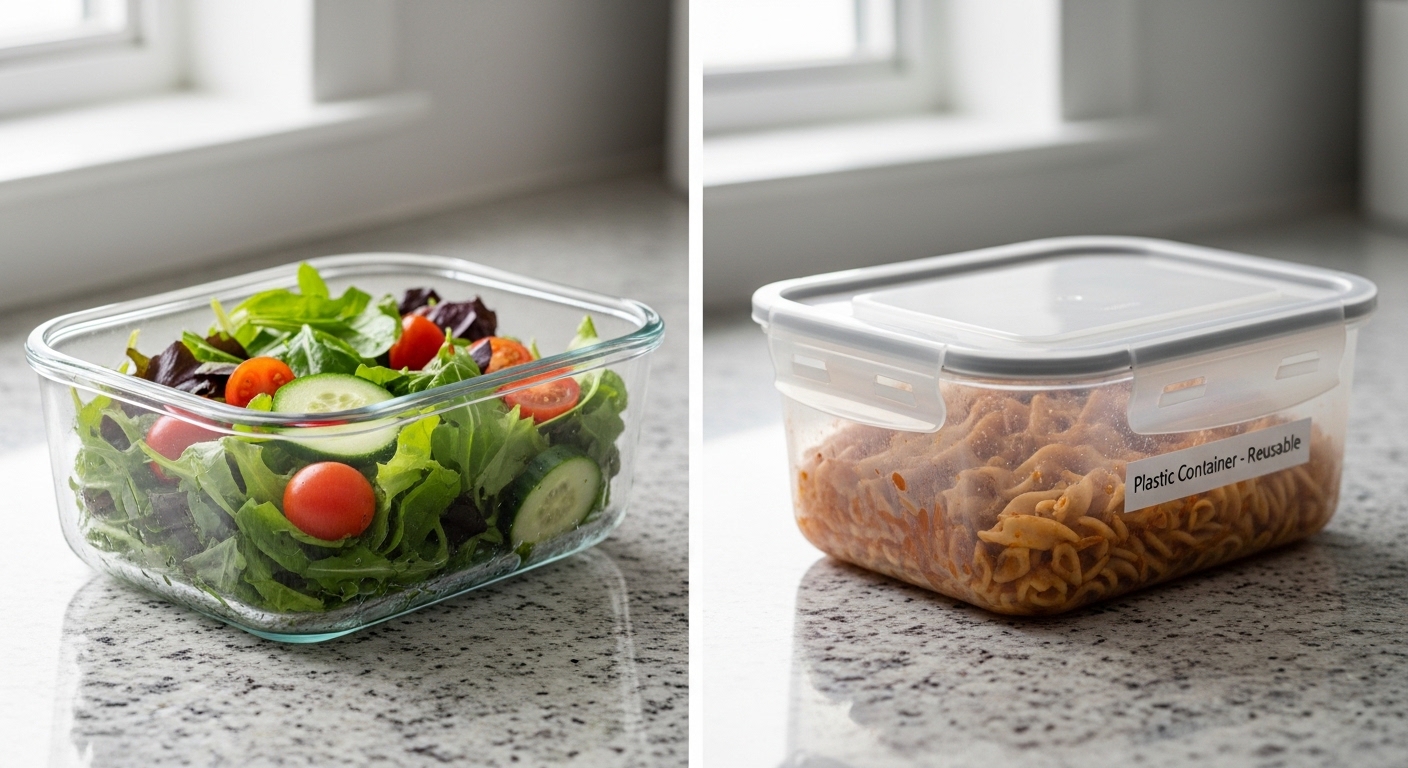
2) Stains (tomato sauce is the real test)
Glass
Pros
- Resists staining extremely well.
- Easy to get truly clean—no orange tint over time.
Cons
- Glass can look cloudy if you use harsh detergents or hard water, but that’s cosmetic.
Plastic
Pros
- New plastic looks great.
Cons
- Stains easily from tomato, turmeric, chili oil.
- Staining often comes with odor retention.
Winner: Glass
3) Microwave safety: what’s the real risk?
Glass
Pros
- Generally the most “set it and forget it” option for microwaving.
- Doesn’t warp, and it’s less likely to leach chemicals (glass is inert).
Cons
- Thermal shock can crack glass (e.g., straight from fridge/freezer to high heat).
- Lids are often plastic/silicone—don’t microwave lids sealed tight.
Best practice: loosen lid or vent it; avoid sudden extreme temperature changes.
Plastic
Pros
- Convenient and light; easy for quick reheats.
Cons
- Even “microwave-safe” plastic can warp over time, especially with oily foods (oil heats hotter).
- Higher concern for chemical migration when heated, particularly if the container is old/scratched.
- Plastic lids can deform and stop sealing well after repeated microwaving.
Best practice: avoid microwaving oily/red sauces in plastic; reheat food in glass/ceramic if possible.
Winner: Glass for confidence + durability
4) Freezer performance
Glass
Pros
- Great for freezer meal prep if labeled and stacked properly.
- Doesn’t pick up freezer smells.
Cons
- Heavier and can break if dropped.
- Needs headspace for expanding liquids; thermal shock risk when thawing fast.
Plastic
Pros
- Best for freezer convenience: light, flexible, less scary to drop.
- Good for portioning soups, rice, and proteins.
Cons
- Can get brittle in deep freeze (varies by plastic type).
- Lids may warp over time.
Winner: Plastic for daily freezer practicality (with smart use)
5) Portability (lunches, work, school)
Glass
Pros
- Feels premium; stable; reheats beautifully.
Cons
- Heavy, and break risk is real.
- Not ideal for kids’ backpacks or commutes with lots of walking.
Plastic
Pros
- Lightweight, travel-friendly, less break risk.
- Best for packed lunches and meal prep transport.
Cons
- Odor/stain issues show up faster if you carry saucy foods often.
Winner: Plastic
6) Leak resistance (this depends more on the lid than the material)
What actually matters:
- Gasketed lids (silicone ring) + strong latches = best leaks.
- A flat lid with a weak rim seal = leaks, regardless of glass or plastic base.
In general:
- Glass sets often pair with strong latching lids, so they tend to leak less.
- But a good plastic set with gasket + latches can be equally reliable.
Winner: depends on lid design, but glass sets often edge ahead
7) Long-term value (what you’ll replace first)
Glass
Pros
- Glass bases can last years.
- When something fails, it’s usually the lid, not the container.
Cons
- Higher upfront cost (but lower replacement frequency).
Plastic
Pros
- Lower upfront cost.
Cons
- You’ll replace sooner due to:
- warping from microwaves
- scratches (which hold odors)
- stained, “old-looking” containers
- lids losing seal
Winner: Glass for long-term value
Best choice for most people (the “optimal” setup)
If you want one winner overall: Glass
Because it wins the categories that affect daily quality of life:
- taste neutrality
- stain/odor resistance
- microwave confidence
- long-term durability
But the smartest “real life” choice is a hybrid
- Glass containers for: leftovers, sauces, curries, tomato-based meals, reheating
- Plastic containers for: lunches on the go, snacks, cold storage, freezer portions
That combo gives you best performance + best convenience without overspending.
Buying tips (so you don’t regret it later)
- Look for vented or easy-open lids (especially if you microwave).
- Choose sets with replaceable lids or easy-to-find lid replacements.
- For plastic, prioritize:
- BPA-free labeling
- thicker walls (less warping)
- fewer scratches (don’t use metal utensils inside)
Final verdict
- Go glass if you’re tired of stains, smells, and warped lids—and you reheat often.
- Go plastic if you meal prep for travel and want lightweight, low-stress portability.
- Best overall for most kitchens: glass for hot + saucy, plastic for cold + carry.